Technology
Learn about the platform powering today's most advanced automation applications


Technology
Learn about the platform powering today's most advanced automation applications
Technology
Learn about the platform powering today's most advanced automation applications
Palletizing Systems: How MujinOS Improves Warehouse Automation and Efficiency
Palletizing Systems: How MujinOS Improves Warehouse Automation and Efficiency
Driving Warehouse Efficiency with Palletizing Automation
Automated palletizing is no longer just a way to reduce manual labor — it has become a strategic lever for improving warehouse efficiency, scalability, and operational resilience.
As supply chains grow more complex and SKU variety increases, traditional palletizing solutions often struggle to keep pace. Rigid programming, slow changeovers, and downtime from minor disruptions can quickly erode expected ROI.
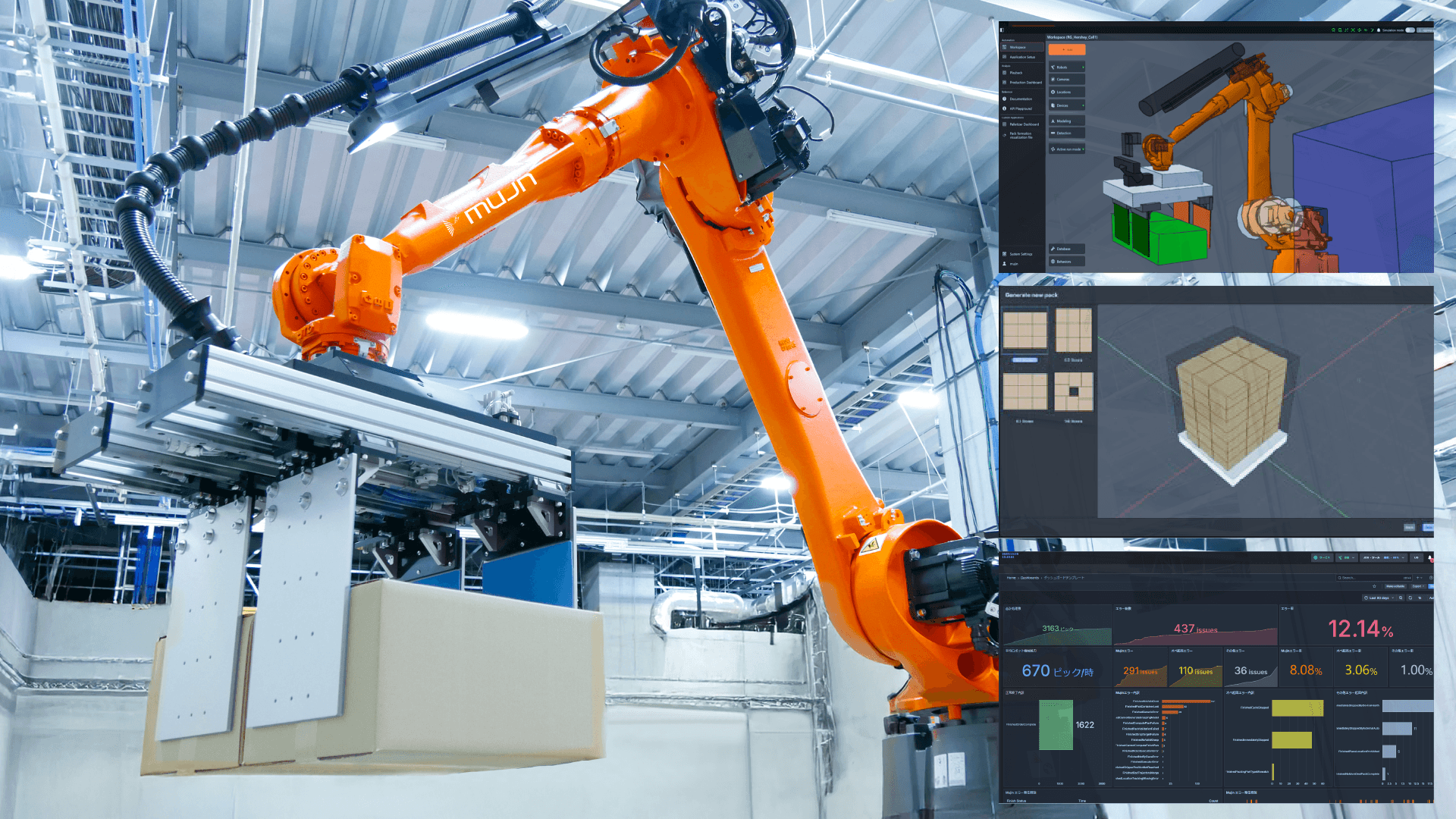
Modern warehouses need palletizing systems that are not only fast, but also flexible, intelligent, and reliable. This is where software-driven robotic palletizing powered by MujinOS is redefining what automation can achieve.
The Business Case for Automated Palletizing
The business case for automated palletizing is stronger than ever, but not all solutions deliver equal results. The difference between a system that provides measurable ROI and one that underperforms often depends on how well it handles the realities of a 24/7 warehouse environment.
When evaluating automated palletizing systems, manufacturers, warehouse operators, and integrators should look beyond speed and payload specifications. The right system should deliver flexibility, resilience, and long-term reliability — transforming palletizing from a tactical tool into a strategic investment.
Palletizing automation directly impacts:
Labor stability
Workplace safety
Throughput consistency
Overall Equipment Effectiveness (OEE)
Long-term warehouse efficiency
The question is no longer whether to automate palletizing — but how to implement it in a way that supports growth.
See Intelligent Automated Palletizing in Action
Reading about automation is one thing — seeing it operate in a real production environment is another.
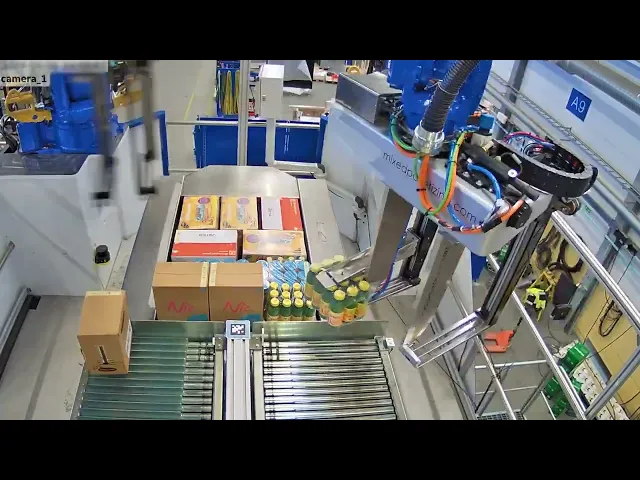
A real-world robotic palletizing system powered by MujinOS demonstrates how software-driven automation handles dynamic workloads, changing conditions, and high throughput without constant reprogramming.
This type of deployment highlights what modern robotic palletizing systems should deliver:
Adaptability to varying case sizes and pallet patterns
Reliable performance in continuous operations
Smooth coordination between robots, software, and peripheral equipment
Minimal operator intervention thanks to intelligent control
For decision-makers, this is where automation moves beyond theory. It becomes a practical tool to improve OEE, stabilize operations, and support scalable growth.
Rather than relying on rigid, pre-programmed routines, software-defined palletizing powered by MujinOS enables robots to perceive, decide, and act based on real-world conditions — a key requirement for today’s high-mix, high-variability warehouses.
Need to automate palletizing? Contact Us
Flexibility to Adapt to Changing SKUs
In today’s fast-moving e-commerce and manufacturing landscape, SKU flexibility is critical. Product mixes change frequently, packaging evolves, and customer expectations continue to rise.
Modern automated palletizing systems must evolve just as quickly as production lines and warehouse operations. The most effective solutions allow operators to add or change SKUs, case sizes, and pallet patterns without complex reprogramming.
Key benefits include:
Faster deployments
Less reliance on scarce programming resources
Seamless adaptation to modern manufacturing demands
With software-defined robotic palletizing, new product introductions and packaging changes no longer require lengthy engineering cycles. This flexibility enables warehouses to respond faster to market shifts and customer needs.
PLC, Device, and Accessory Agnostic Integration
True scalable automation depends on interoperability.
Warehouses rarely operate within a single-vendor ecosystem, and expansion often introduces new equipment. Robotic palletizing systems must integrate seamlessly with conveyors, end effectors, vision systems, PLCs, and upstream control layers — regardless of brand.
Device-agnostic integration delivers:
Freedom from vendor lock-in
Lower lifecycle costs
Future-proof automation architecture
Easier robotics integration into existing workflows
A software-centric approach allows facilities to scale and adapt without rebuilding entire systems.
Intelligent Error Recovery
Even the most advanced automated palletizing systems will encounter errors. Cartons shift. Labels misalign. Upstream equipment introduces inconsistencies.
What separates high-performing systems from average ones is intelligent error recovery.
Leading systems provide:
Built-in error detection
Automated recovery routines
Minimal operator intervention
Real-time system awareness
Fast recovery minimizes disruptions and protects OEE. Instead of stopping the line and waiting for manual correction, intelligent systems adjust and continue operating. This dramatically reduces unplanned downtime and labor involvement.
Proven Reliability Benchmarks
For operations running 24/7, uptime is mission-critical. A palletizing cell that stops unexpectedly creates ripple effects throughout the warehouse.
When selecting a robotic palletizing system, prioritize vendors who:
Provide transparent OEE benchmarks
Offer measurable service-level commitments
Deliver proactive diagnostics and support
Demonstrate proven reliability in real-world operations
Even small periods of downtime can result in significant financial losses. Reliability is not a bonus — it is a requirement.
Why Software-Defined Palletizing Matters
Traditional palletizers rely heavily on fixed logic and manual programming. In contrast, software-defined systems leverage digital twin technology and real-time control to adapt to variability.
This approach enables:
Faster time to deployment
Continuous optimization
Scalable automation across multiple sites
Smarter system-level decision-making
Instead of static automation, warehouses gain dynamic, adaptive systems that improve over time.
Conclusion
Automated palletizing is about more than stacking boxes. It is about choosing a future-ready system that enables resilience, adaptability, and growth.
A software-driven platform MujinOS delivers:
Faster deployments and scalable projects for integrators
Higher uptime and safer operations for warehouses
Improved OEE and warehouse efficiency
A proven path to long-term competitiveness
When evaluating robotic palletizing systems, the real measure is not just initial cost — it is the ability to adapt, scale, and sustain performance over time.
Automation should not be a constraint. It should be a growth platform that prepares your business for both today’s challenges and tomorrow’s opportunities.
To learn more about how Mujin can transform your warehouse operations, explore our applications on Mujin Europe website or speak with our automation experts.
Driving Warehouse Efficiency with Palletizing Automation
Automated palletizing is no longer just a way to reduce manual labor — it has become a strategic lever for improving warehouse efficiency, scalability, and operational resilience.
As supply chains grow more complex and SKU variety increases, traditional palletizing solutions often struggle to keep pace. Rigid programming, slow changeovers, and downtime from minor disruptions can quickly erode expected ROI.
Modern warehouses need palletizing systems that are not only fast, but also flexible, intelligent, and reliable. This is where software-driven robotic palletizing powered by MujinOS is redefining what automation can achieve.
The Business Case for Automated Palletizing
The business case for automated palletizing is stronger than ever, but not all solutions deliver equal results. The difference between a system that provides measurable ROI and one that underperforms often depends on how well it handles the realities of a 24/7 warehouse environment.
When evaluating automated palletizing systems, manufacturers, warehouse operators, and integrators should look beyond speed and payload specifications. The right system should deliver flexibility, resilience, and long-term reliability — transforming palletizing from a tactical tool into a strategic investment.
Palletizing automation directly impacts:
Labor stability
Workplace safety
Throughput consistency
Overall Equipment Effectiveness (OEE)
Long-term warehouse efficiency
The question is no longer whether to automate palletizing — but how to implement it in a way that supports growth.
See Intelligent Automated Palletizing in Action
Reading about automation is one thing — seeing it operate in a real production environment is another.
A real-world robotic palletizing system powered by MujinOS demonstrates how software-driven automation handles dynamic workloads, changing conditions, and high throughput without constant reprogramming.
This type of deployment highlights what modern robotic palletizing systems should deliver:
Adaptability to varying case sizes and pallet patterns
Reliable performance in continuous operations
Smooth coordination between robots, software, and peripheral equipment
Minimal operator intervention thanks to intelligent control
For decision-makers, this is where automation moves beyond theory. It becomes a practical tool to improve OEE, stabilize operations, and support scalable growth.
Rather than relying on rigid, pre-programmed routines, software-defined palletizing powered by MujinOS enables robots to perceive, decide, and act based on real-world conditions — a key requirement for today’s high-mix, high-variability warehouses.
Need to automate palletizing? Contact Us
Flexibility to Adapt to Changing SKUs
In today’s fast-moving e-commerce and manufacturing landscape, SKU flexibility is critical. Product mixes change frequently, packaging evolves, and customer expectations continue to rise.
Modern automated palletizing systems must evolve just as quickly as production lines and warehouse operations. The most effective solutions allow operators to add or change SKUs, case sizes, and pallet patterns without complex reprogramming.
Key benefits include:
Faster deployments
Less reliance on scarce programming resources
Seamless adaptation to modern manufacturing demands
With software-defined robotic palletizing, new product introductions and packaging changes no longer require lengthy engineering cycles. This flexibility enables warehouses to respond faster to market shifts and customer needs.
PLC, Device, and Accessory Agnostic Integration
True scalable automation depends on interoperability.
Warehouses rarely operate within a single-vendor ecosystem, and expansion often introduces new equipment. Robotic palletizing systems must integrate seamlessly with conveyors, end effectors, vision systems, PLCs, and upstream control layers — regardless of brand.
Device-agnostic integration delivers:
Freedom from vendor lock-in
Lower lifecycle costs
Future-proof automation architecture
Easier robotics integration into existing workflows
A software-centric approach allows facilities to scale and adapt without rebuilding entire systems.
Intelligent Error Recovery
Even the most advanced automated palletizing systems will encounter errors. Cartons shift. Labels misalign. Upstream equipment introduces inconsistencies.
What separates high-performing systems from average ones is intelligent error recovery.
Leading systems provide:
Built-in error detection
Automated recovery routines
Minimal operator intervention
Real-time system awareness
Fast recovery minimizes disruptions and protects OEE. Instead of stopping the line and waiting for manual correction, intelligent systems adjust and continue operating. This dramatically reduces unplanned downtime and labor involvement.
Proven Reliability Benchmarks
For operations running 24/7, uptime is mission-critical. A palletizing cell that stops unexpectedly creates ripple effects throughout the warehouse.
When selecting a robotic palletizing system, prioritize vendors who:
Provide transparent OEE benchmarks
Offer measurable service-level commitments
Deliver proactive diagnostics and support
Demonstrate proven reliability in real-world operations
Even small periods of downtime can result in significant financial losses. Reliability is not a bonus — it is a requirement.
Why Software-Defined Palletizing Matters
Traditional palletizers rely heavily on fixed logic and manual programming. In contrast, software-defined systems leverage digital twin technology and real-time control to adapt to variability.
This approach enables:
Faster time to deployment
Continuous optimization
Scalable automation across multiple sites
Smarter system-level decision-making
Instead of static automation, warehouses gain dynamic, adaptive systems that improve over time.
Conclusion
Automated palletizing is about more than stacking boxes. It is about choosing a future-ready system that enables resilience, adaptability, and growth.
A software-driven platform MujinOS delivers:
Faster deployments and scalable projects for integrators
Higher uptime and safer operations for warehouses
Improved OEE and warehouse efficiency
A proven path to long-term competitiveness
When evaluating robotic palletizing systems, the real measure is not just initial cost — it is the ability to adapt, scale, and sustain performance over time.
Automation should not be a constraint. It should be a growth platform that prepares your business for both today’s challenges and tomorrow’s opportunities.
To learn more about how Mujin can transform your warehouse operations, explore our applications on Mujin Europe website or speak with our automation experts.
Media contact
marketing@mujin-europe.com
Have a question?
Learn how MujinOS delivers real-time perception, motion control, and no-code deployment—across any robotic system
Have a question?
Learn how MujinOS delivers real-time perception, motion control, and no-code deployment—across any robotic system